


Free and Cheap Things to Do in Toronto
Toronto has a reputation for being an expensive city. Parts of that reputation are earned.
But a genuinely good day here can cost almost nothing.
The parks are free. The waterfront is free. Many of the big galleries run evenings where you pay what you want. The ferry to the Toronto Islands costs a few dollars. Knowing where to put your money, and what to skip paying for entirely, is half the local skill set.
This is our list. Grouped by type, honest about what is actually free versus just cheap.
Free outdoors
The easiest place to start.
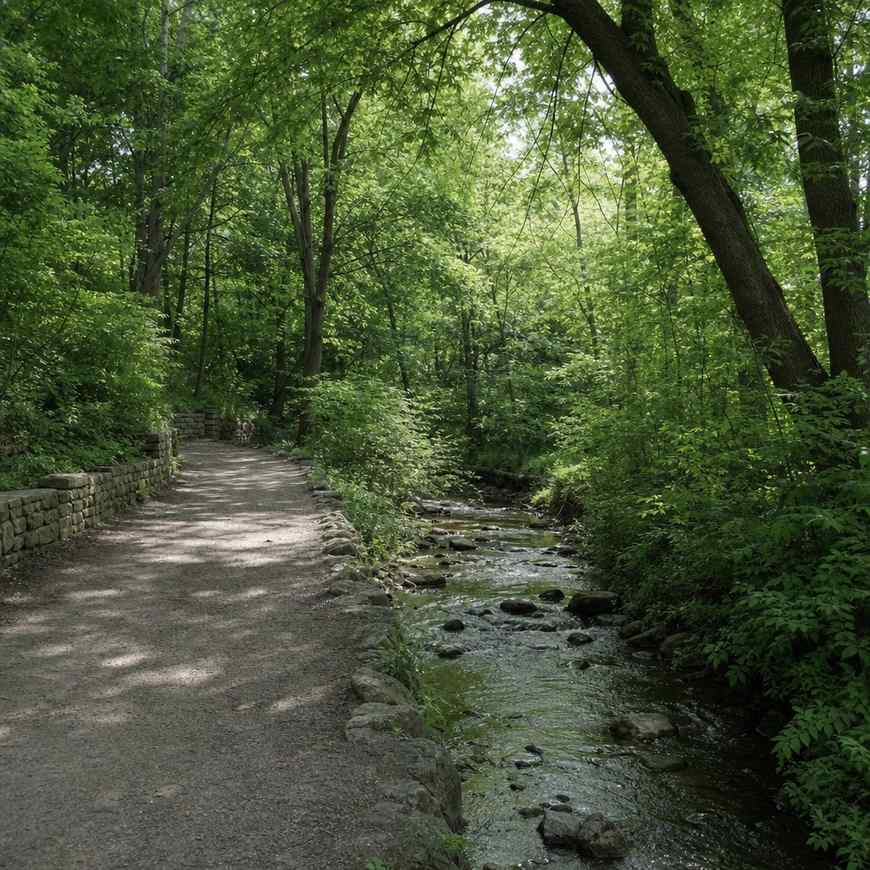
Toronto’s ravine system is one of the best things about the city, and almost no visitor knows it exists. Hundreds of kilometres of trails cut through it along river valleys, linking parks, quiet woodland, and creek paths within walking distance of dense neighbourhoods.
You can spend hours in what feels like a forest without leaving the city limits. No fee, no booking, no gear required beyond decent shoes.
High Park is the most accessible entry point. Over 160 hectares in the west end, with trails, a free zoo, a pond, and enough space to spend most of a morning. Torontonians treat it as a backyard in every season: cherry blossoms in April and May, skating on the pond in winter. It is free, it is on the TTC, and it rewards wandering.
The lakeshore is another no-cost constant. Walk west from downtown along the waterfront path and the city opens up. The view across Lake Ontario is wide and quiet. It is a long way from what you expect of a city this size.
Out east, Cherry Beach is where locals actually go to swim, barbecue, and let the afternoon run long. It is low-key, free to enter, and worth the trip if you are here in summer. It does not feel like a tourist stop because it mostly is not one.
A small fare, a big payoff: the Toronto Islands
Technically not free, but barely.
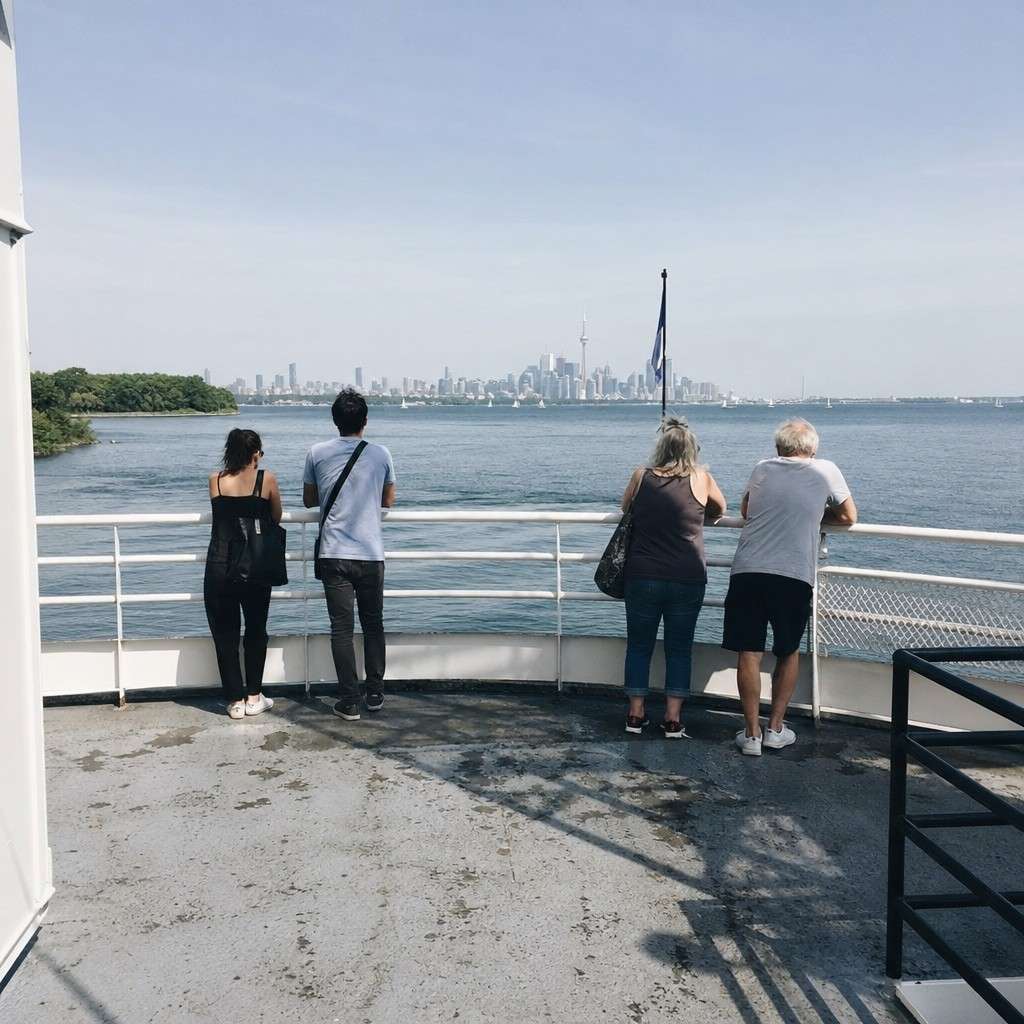
A ferry runs from the Jack Layton Ferry Terminal near Union Station out to the Toronto Islands, a cluster of car-free parkland sitting just offshore. The fare is a few dollars each way, and the payoff is one of the better afternoons this city offers.
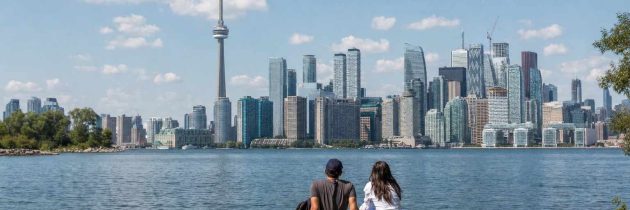
The skyline view on the water, looking back at the towers from the islands, is the photo most Torontonians have in their phones.
No car. No museum admission. No reservation. Just the ferry fare and an afternoon. Our guide to things to see and do on Toronto’s waterfront covers the full lakeshore picture.
The beaches on the islands side can get busy on a hot Saturday, so a weekday morning is the local move.
Free and cheap culture
The big galleries here are worth knowing about, not just for what is inside them, but for how they price access.
The Art Gallery of Ontario and the Royal Ontario Museum both run programs with free or pay-what-you-can admission, often on weekday evenings. The specific timing changes, so check the current schedule on each institution’s site before you go. But if you are flexible, there is usually a window.
The free hour at a major gallery is one of the best trades in the city: major permanent collections, almost no line, and a different crowd than the weekend rush.
Public art fills in the gaps everywhere else. The city has commissioned large murals across neighbourhoods for years, and some of it is genuinely good. Graffiti Alley, a laneway running behind Queen Street West, is one concentrated version of this. Worth a walk-through, takes fifteen minutes, costs nothing.
Neighbourhood wandering
Some of the best hours in Toronto cost nothing because the point is just to be somewhere good.
Kensington Market is the clearest example. A jumble of independent shops, vintage clothing, cheap food from everywhere, and street-level colour that changes every time you visit.
You can eat well for very little, or just walk. There is no entrance and no map required. Our guide to Toronto’s neighbourhoods explains the character of each one and which are worth your time.
The Distillery District is free to walk and has good street art and architecture. On weekends it is busy. On a slow weekday morning it is quieter and easier to photograph.
West Queen West and Parkdale both reward just walking. Different feel, different food, different decade of design. Pick one and spend two hours.
Window-shopping a neighbourhood, eating something cheap, and sitting somewhere people-watch is a legitimate Toronto afternoon. Not every hour needs a budget.
Free summer festivals and outdoor concerts
Summer in Toronto runs on festivals, and many of them are free or mostly free.
The Beaches International Jazz Festival in late July is one of the bigger ones. Several stages along Queen Street East and the Boardwalk, a lot of it outdoor, and free to attend. The main indoor shows cost money; the outdoor stages do not.
Caribana, the Toronto Caribbean Carnival, is one of the largest street festivals in North America. The parade is the centrepiece, and it runs along Lakeshore Boulevard in late July or early August.
Free to watch from the street. The costumes and the sound system are worth the trip on their own.
The city also runs smaller outdoor concert series in parks and public spaces across the summer. Check the City of Toronto’s events calendar when you arrive, because what is on in any given week shifts, and some of the best things are not heavily advertised.
Free festivals are where a Toronto summer actually lives. The park concerts and street stages are not a warm-up for the paid events. For a lot of residents, they are the whole thing.
The one-trip summary
Toronto can be expensive. It can also cost almost nothing.
The formula locals know: the ravines and the parks are free, the ferry to the islands is cheap, gallery evenings are worth planning around, and a slow afternoon in a neighbourhood worth wandering costs only what you eat. If you are putting together a first trip and working out what is worth paying for, our first-time Toronto guide is the place to start.
Spend on one or two things. Let the rest be free.